This guide explains what facility management is, how services are categorized, why it matters across industries, and which best practices separate good facilities from great ones. It also covers how technology — including autonomous cleaning robots — is changing what FM teams can accomplish with the same headcount.
Key Takeaways
- Facility management (FM) integrates people, place, and process to keep buildings functional, safe, and productive
- FM services divide into hard services (physical infrastructure like HVAC and electrical) and soft services (cleaning, security, and occupant support) — knowing which you're managing shapes every procurement and staffing decision
- Effective FM reduces costs, improves safety compliance, and directly affects employee productivity
- The global FM market is projected to reach $3.72 trillion by 2031, reflecting how central this function is to modern operations
- Autonomous technology like CMMS software and cleaning robots lets facility teams prevent failures and reduce labor dependency before problems compound
What is Facility Management?
According to ISO 41011, as cited by Global FM, facility management is "an organizational function which integrates people, place and process within the built environment with the purpose of improving the quality of life of people and the productivity of the core business."
Put simply, FM is everything required to make a building work for the people inside it — and that scope runs wider than most people assume.
FM is not simply cleaning crews and maintenance calls. It covers the entire physical and operational environment: parking lots, executive suites, HVAC systems, catering contracts, and everything in between.
FM vs. Facility Maintenance: A Key Distinction
These two terms get used interchangeably, but they describe different things:
| Facility Management | Facility Maintenance | |
|---|---|---|
| Scope | Broad strategic discipline | Subset of FM |
| Focus | All building operations and services | Technical upkeep and repairs |
| Example activities | Space planning, vendor management, compliance, energy strategy | HVAC servicing, electrical repairs, plumbing fixes |
Facility maintenance is what happens when something needs fixing or inspecting. Facility management is the overarching function that decides when, how, and by whom that work gets done — and connects it to broader organizational goals.
Who Needs FM?
IFMA identifies FM as applicable across a wide range of facility types, including:
- Factories and manufacturing plants
- Offices and corporate campuses
- Hospitals and healthcare facilities
- Shopping malls, airports, and stadiums
- Museums, universities, and government buildings
If people occupy a building in a professional or institutional context, FM applies. The numbers reflect that reach: Mordor Intelligence projects the global FM market at $2.86 trillion in 2025, growing to $3.72 trillion by 2031 at a 4.33% CAGR.
Key Facility Management Services: Hard vs. Soft
The clearest way to understand what FM actually covers is the hard services vs. soft services framework. The distinction matters practically — for budgeting, vendor selection, compliance planning, and staffing.
Hard Services (Physical Infrastructure)
Hard services are tied to the physical building itself. They are typically legally required, structurally critical, or both. Failure in a hard service category often means regulatory violation, safety risk, or building shutdown.
Key hard services include:
- HVAC systems — heating, ventilation, and air conditioning
- Electrical systems — power distribution, lighting, backup generation
- Plumbing and water systems — supply, drainage, hot water
- Fire safety systems — suppression, alarms, emergency exits
- Structural maintenance — roof, facade, floors, load-bearing elements
Within hard services, maintenance falls into three types:
- Preventive maintenance — scheduled inspections designed to catch issues before they escalate
- Corrective maintenance — restoring functionality after a failure has already occurred
- Predictive maintenance — using sensor data and analytics to forecast failures and intervene at the right time, not too early and not too late
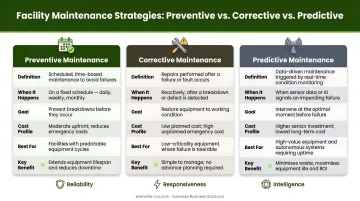
JLL's 2025 analysis describes predictive maintenance as the emerging third tier — using IoT sensors to schedule interventions based on actual equipment condition rather than a fixed calendar.
Soft Services (Operational & Support Functions)
Soft services relate to the day-to-day comfort, cleanliness, and operation of a building for its occupants. These are less about structural compliance and more about experience and function.
Common soft services include:
- Custodial and cleaning services
- Waste management and recycling
- Security and access control
- Pest control
- Grounds and landscaping maintenance
- Space planning and moves management
- Catering and food service
- Mail and reception services
Cleaning and sanitation is the most visible, highest-frequency soft service — and in healthcare and food service environments, it carries direct regulatory weight. A dirty hospital corridor isn't just a perception problem; it's an infection control issue. A restaurant kitchen with sanitation gaps is a health code violation, not just a reputational one.
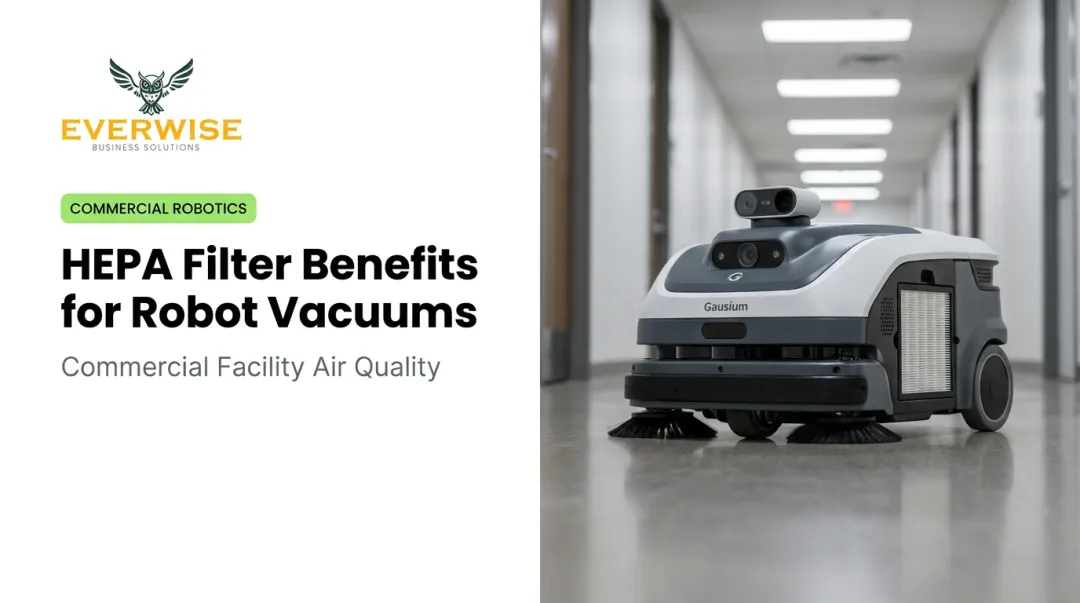
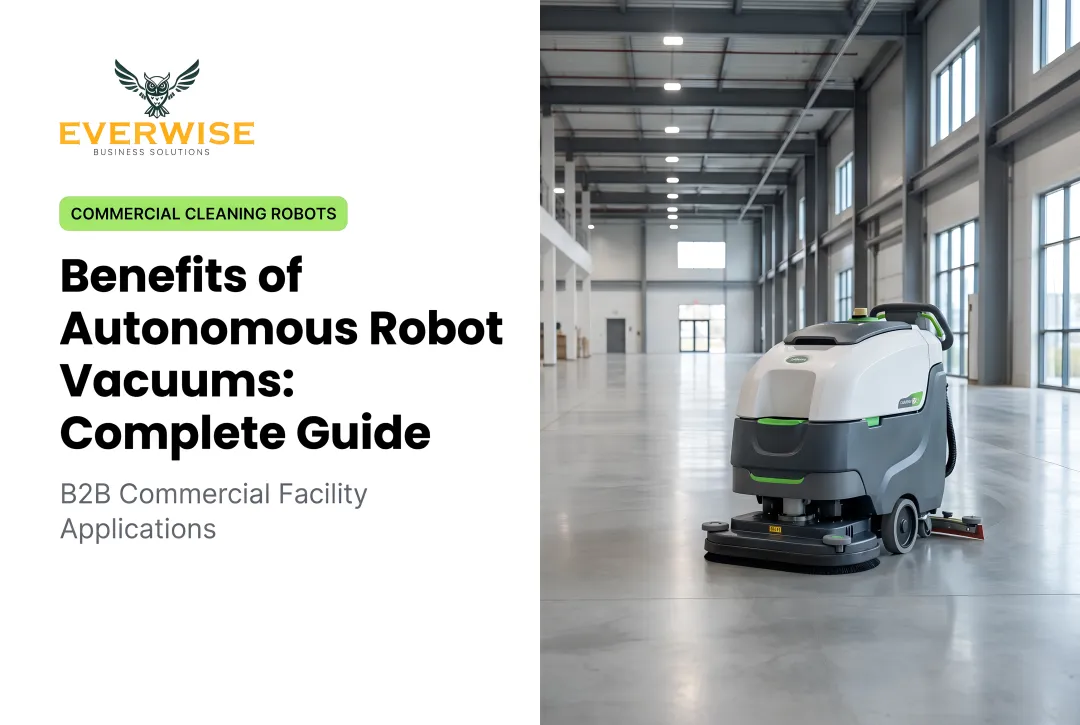
FM teams are deploying autonomous floor cleaning robots — such as the Gausium commercial line — to handle routine floor cleaning with greater consistency than shift-based manual labor alone.
The Core Benefits of Effective Facility Management
Effective facility management protects physical assets, controls operational risk, and keeps core business functions running without interruption — which makes it a direct driver of financial performance, not just a cost center.
Cost Reduction and Budget Predictability
Reactive maintenance — waiting for something to break before fixing it — consistently costs more than preventive programs. Emergency repairs carry premium labor rates, expedited parts costs, and unplanned downtime. Preventive maintenance programs convert unpredictable repair budgets into scheduled, plannable expenses.
For Texas facilities using Gausium autonomous cleaning robots through Everwise Business Solutions, the labor economics follow a similar logic: replacing 1–2 FTE positions per shift with a robot unit plus maintenance contract typically delivers a 12–36 month payback period, after which ongoing costs drop to maintenance, power, and accessories.
Safety, Compliance, and Risk Management
FM teams own regulatory compliance for the built environment. That includes OSHA standards, building codes, fire safety systems, and industry-specific requirements in healthcare, education, and manufacturing.
The financial and human stakes are concrete:
- OSHA penalties as of January 2025 reach $16,550 per serious violation and $165,514 per willful or repeated violation
- BLS data shows 844 fatal workplace injuries from falls, slips, and trips in 2024 — a category FM directly controls through maintained walking surfaces, lighting, and signage
Employee Productivity and Occupant Wellbeing
The physical environment has a measurable impact on the people inside it. Harvard T.H. Chan School of Public Health research found that higher PM2.5 levels and lower ventilation rates were associated with slower response times and reduced cognitive accuracy among office workers.
Indoor air quality, temperature control, and cleanliness are all within FM's direct scope. Facilities that manage these variables well don't just avoid harm — they create conditions where people actually perform better.
Asset Longevity and Property Value
Buildings and equipment that receive consistent care retain their value longer. Regular maintenance defers capital replacement, extends equipment life cycles, and supports property marketability. For most organizations, facilities rank among the largest assets on the balance sheet. Consistent FM is what keeps that value from eroding before its time.
The Role of a Facility Manager
The facility manager is the person responsible for making sure every system, service, and space inside a building serves the people who use it. They hold a variety of titles — operations director, building manager, director of facilities, director of environmental services — but share the same core accountability.
5 Key Roles of a Facility Manager
- Operations & Maintenance Oversight — managing day-to-day building systems and coordinating maintenance schedules
- Space Planning & Utilization — ensuring physical spaces match how the organization actually works
- Health, Safety & Compliance — maintaining a safe environment and meeting all applicable codes and standards
- Budget & Vendor Management — controlling costs, managing service contracts, and overseeing third-party providers
- Sustainability & Energy Management — driving efficiency, reducing waste, and meeting environmental targets
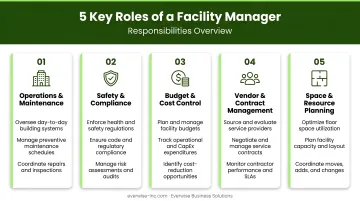
These five responsibilities cover the operational core. IFMA's full competency framework spans 11 areas — including Finance & Business, Risk Management, Occupancy & Human Factors, and Facility Information Management — a scope that reflects how far the role has expanded beyond building operations.
For professionals pursuing credentials, IFMA offers two professional designations: the Facility Management Professional (FMP) for those building core FM skills, and the Certified Facility Manager (CFM) for experienced practitioners. According to BLS data, approximately 422,600 administrative services and facilities managers were employed in the U.S. in 2024, with 4% projected growth through 2034.
Facility Management Best Practices
Shift from Reactive to Preventive Maintenance
The single highest-impact operational change most organizations can make is moving from "fix it when it breaks" to a scheduled preventive maintenance program. Reactive maintenance is unpredictable — it disrupts operations, inflates repair costs, and creates liability exposure. Preventive programs turn maintenance into a managed line item with predictable costs and fewer surprises.
The same principle applies to cleaning. Autonomous cleaning robots handle high-frequency floor maintenance on a fixed schedule — corridors get cleaned every day regardless of staffing availability, shift gaps, or competing priorities.
Centralize Data and Documentation
Effective FM depends on having current, accessible records for:
- Asset inventories and maintenance histories
- Vendor contracts and SLA terms
- Compliance documents and inspection records
- Space utilization data
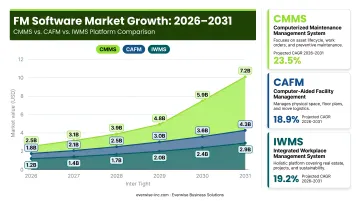
Fragmented tracking — spreadsheets, paper logs, siloed systems — leads to missed inspections, compliance gaps, and increased liability. The FM software market, which includes CMMS, CAFM, and IWMS platforms, is projected to grow from $2.98 billion in 2026 to $4.95 billion by 2031, reflecting how rapidly organizations are centralizing this data.
Align FM Strategy with Business Goals
FM teams that measure only internal metrics like work order completion rates tend to struggle for budget and influence. Those who connect their KPIs to organizational outcomes earn both:
- Operational credibility — uptime rates, incident frequency, compliance scores
- Financial credibility — cost-per-square-foot, energy cost reduction, capital deferral
FM leaders who present metrics in this language consistently report faster budget approvals, earlier inclusion in capital planning, and stronger cross-functional alignment with finance and operations.
How Technology is Modernizing Facility Management
FM operations are changing fast. JLL's 2025 Global State of Facilities Management Report finds that 28% of organizations have already embedded AI solutions in FM operations — a share that was essentially zero five years ago.
The tools driving this shift include:
- CMMS platforms — centralize work orders, asset data, and maintenance schedules
- IoT sensors — monitor equipment condition in real time and trigger alerts before failures
- Building automation systems — manage HVAC, lighting, and security centrally, reducing energy waste and manual oversight
- AI-powered analytics — identify patterns in maintenance data and predict failure points
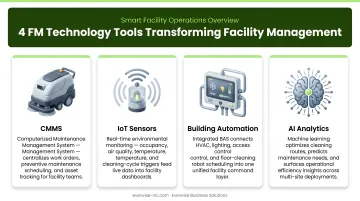
The smart building market is projected to reach $204.43 billion by 2032, reflecting the pace at which physical infrastructure is becoming data-connected.
Autonomous Floor Robots: Where FM Automation Gets Practical
Cleaning automation is where many facility teams are seeing the most immediate operational impact. The commercial cleaning robot market was valued at $1.77 billion in 2024 and is projected to grow at 24.3% CAGR through 2030, driven almost entirely by institutional and commercial deployments rather than consumer products.
Everwise Business Solutions, as the authorized Gausium distributor for Texas, deploys these systems across hotels, hospital corridors, school cafeterias, retail floors, warehouses, and distribution centers throughout San Antonio, Houston, Dallas, Austin, and the Rio Grande Valley.
The practical benefit for FM teams is labor redirection. Gausium robots handle repetitive, high-frequency floor cleaning (sweeping, scrubbing, vacuuming), freeing existing staff for higher-value work that requires human judgment.
In healthcare, that means EVS staff can focus on patient rooms and specialized sanitation rather than corridor mopping. In hospitality, housekeeping teams shift to guest-facing duties instead of routine hallway cleaning.
The Gausium lineup covers a range of facility sizes and surface types:
- Phantas / Phantas v1.3 — compact commercial spaces, boutique hotels, clinics, retail boutiques
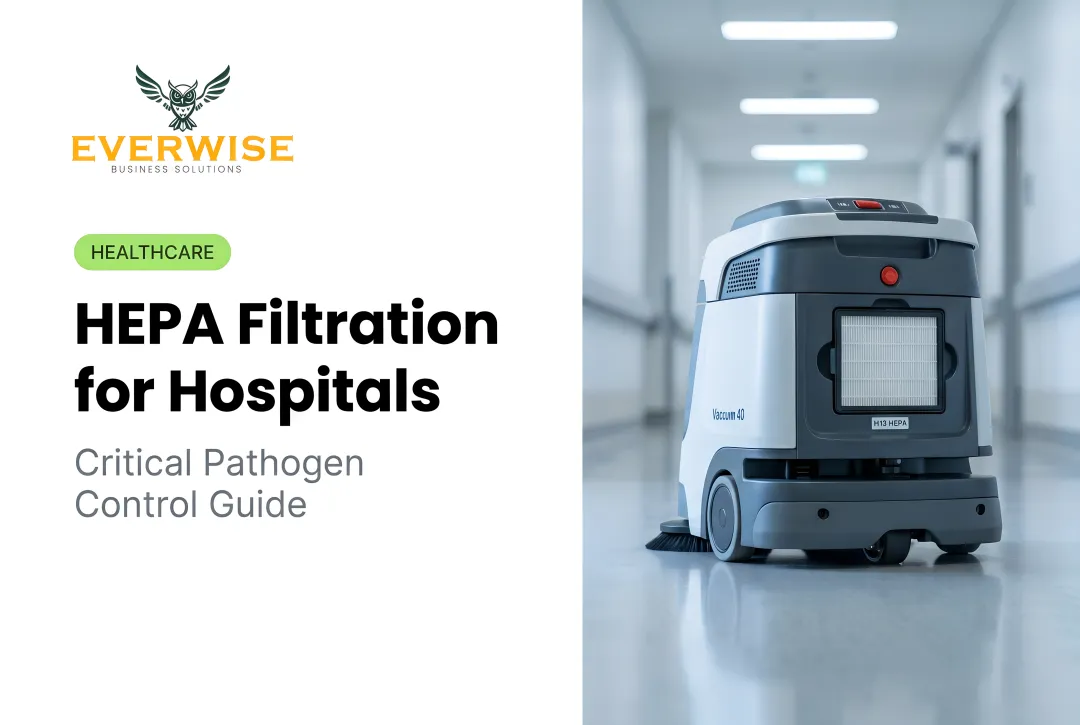
- Vacuum 40 — hotels, hospitals, schools, offices; features H13 medical-grade HEPA filtration for healthcare air quality compliance
- Scrubber 75 — large-scale wet scrubbing for warehouses, hospitals, and manufacturing floors, with Oil Cleaning Mode for industrial environments
- Beetle — heavy-duty industrial sweeper for warehouse aisles, distribution centers, and parking structures
- Marvel and Mira (2026) — enterprise-tier and mid-tier options for large and mid-sized commercial spaces respectively
Everwise supports every deployment with OEM-certified installation, scheduled preventive maintenance contracts, emergency repair dispatch for fleet customers, and multi-site fleet management through the Gausium Mobile App.
Frequently Asked Questions
What are facilities management and maintenance services?
Facility management is the broad strategic function overseeing all building operations — hard and soft services, compliance, space planning, and vendor management. Facility maintenance services are the specific technical tasks within that scope: HVAC servicing, electrical repairs, preventive inspections, and similar physical infrastructure work.
What are the 5 roles of a facility manager?
The five core responsibilities of a facility manager are:
- Overseeing building operations and day-to-day maintenance
- Managing space planning and occupant utilization
- Ensuring health, safety, and regulatory compliance
- Controlling budgets and vendor relationships
- Driving sustainability initiatives and energy efficiency
What are the 4 pillars of facilities management?
The four pillars are People (occupant health, safety, and comfort), Place (the physical environment), Process (standardized operations and maintenance procedures), and Technology (tools and automation that improve efficiency and data visibility).
What is the difference between facility management and facility maintenance?
The key distinction is scope and ownership. Facility management sets strategy — budgets, vendors, compliance, and long-term planning. Facility maintenance executes within that strategy, keeping physical systems operational through inspections, repairs, and scheduled servicing. In practice, maintenance teams report up through the FM function.
What industries benefit most from facility management?
Healthcare, hospitality, education, retail, manufacturing, and commercial real estate see the greatest impact from professional FM — due to high occupant volumes, strict regulatory requirements, and the direct link between facility quality and business outcomes.
How is technology changing facility management?
CMMS software, IoT sensors, building automation systems, and autonomous cleaning robots are pushing FM teams from reactive to proactive operations. Downtime drops, service quality improves, and costs fall — without adding headcount. Autonomous floor-cleaning robots, for example, now handle routine cleaning tasks across hospitals, warehouses, and retail floors while FM staff focus on higher-priority work.