That gap doesn't close by itself. And it matters more than most administrators realize: a 2008 national study of 1,481 students found that 88% said a lack of cleanliness became a distraction that hindered their learning. Cleanliness isn't a facilities issue — it's a student experience issue.
This guide covers where sweeping robots deliver real results on campus, what features actually matter, how to plan a deployment that wins internal approval, and what cost and ROI look like in practice.
Key Takeaways
- Sweeping robots take over repetitive large-area floor cleaning so custodial staff can focus on restrooms, classrooms, and event resets
- Best starting zones: dining halls, student unions, gymnasiums, and main corridors
- Must-have features: autonomous navigation, obstacle detection, edge-cleaning, and H13 HEPA filtration
- Map your top 2–3 high-traffic hard-floor zones before evaluating any product
- ROI is built on labor hours protected and overtime avoided, not on eliminating headcount
Why University Campuses Are Turning to Sweeping Robots
The staffing math is difficult. APPA estimates custodial operations are roughly 90% labor costs — meaning any vacancy has an immediate budget impact. When institutions can't fill positions, the work either goes undone or gets shifted to remaining staff at overtime rates.
Scale makes that labor gap harder to absorb. University campuses aren't office buildings — a single dining hall can exceed 80,000 square feet, a recreation center routinely tops 90,000, and a student union's main floor alone can cover 40,000. Maintaining daily cleanliness across spaces like these with a shrinking custodial workforce isn't a productivity problem. It's a structural one.
Sweeping robots address that structural gap directly. They absorb the highest-volume, most repeatable task in facilities management — large-area floor sweeping — so human staff can spend their hours on work that requires judgment: restrooms, spills, detailed cleaning, and tenant response.
The operational case connects directly to student outcomes. When 84% of students report they cannot perform their best in unclean facilities, floor cleanliness isn't just a maintenance metric — it's a direct input to academic performance and campus reputation.
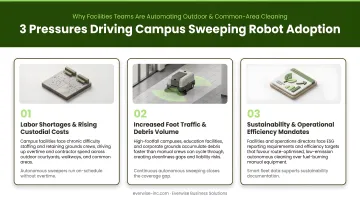
Three pressures are driving adoption across institutions:
- Labor shortages pushing custodial teams below minimum coverage levels
- Campus scale making consistent daily sweeping impractical without automation
- Student experience standards tying cleanliness directly to retention and satisfaction scores
Where Sweeping Robots Work Best on a University Campus
The most common deployment mistake is trying to automate everything at once. The campuses that see fast, measurable results start with 2–3 high-traffic hard-floor zones with predictable cleaning windows, then expand once those routes are stable.
Highest-ROI Indoor Zones
Dining halls and cafeterias are the strongest starting point. They combine the highest daily soil load, open floor plans, and predictable cleaning windows between meal services. These are also among the most visible spaces on campus, and consistent cleanliness here shapes student perception directly.
Rochester Institute of Technology has operated Avidbots Neo robots in its residence halls, athletics building, and arts facilities since 2016. Staff were redirected from repetitive floor sweeping to detail cleaning in bathrooms and common areas. That division of labor is exactly what makes the business case credible to administration.
Student unions, library commons, and recreation centers are the next deployment tier:
- Large open hard-floor footprints with consistent daily traffic
- Predictable overnight or after-hours scheduling windows
- High visibility that signals campus quality to current and prospective students
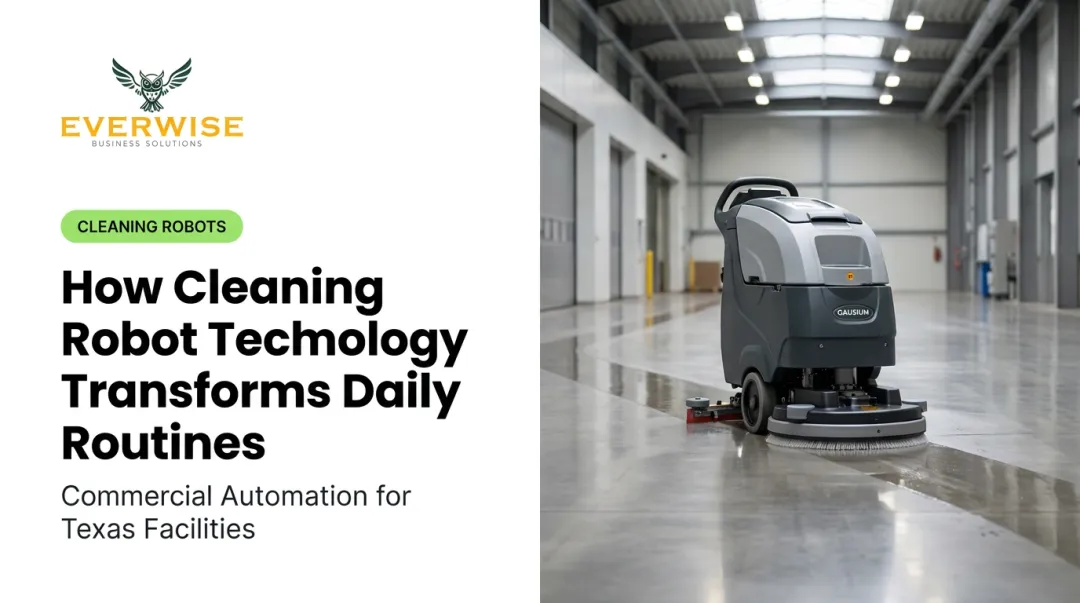
Quinnipiac University, for example, deploys a robotic floor scrubber across its Recreation and Wellness Center, athletic courts, hallways, and foodservice areas, covering 50,000 square feet weekly.
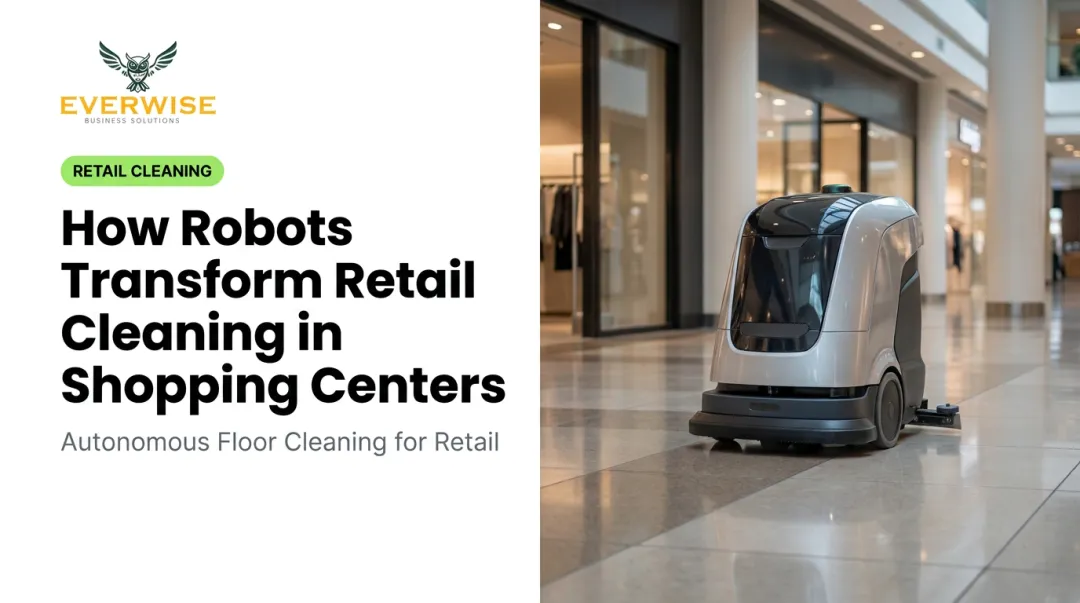
Main corridors and building lobbies matter because they're the first thing prospective students and visitors see. Robots scheduled during overnight windows or between class periods keep these spaces consistently clean without disrupting foot traffic.
Areas That Still Require Human Custodians
Not every space is a good fit. Keep these human-managed:
- Restrooms: need hands-on inspection, sanitation, and judgment no robot currently replicates
- Classrooms with dense furniture: too many obstacles for efficient autonomous navigation
- Event reset areas: demand immediate response and on-the-spot situational calls
- Narrow or irregular service corridors: typically too constrained for commercial robot footprints
This division of labor isn't a limitation. It's the argument that wins over facilities directors, staff, and unions. Robots handle the volume work; humans handle the detail work.
What to Look for in a Campus Sweeping Robot
Features vary significantly across commercial robots. These are the ones that actually matter in a university environment.
Navigation and Mapping
University environments change constantly — furniture moves, events reconfigure spaces, students leave equipment in hallways. Robots must use 3D depth cameras and AI-based navigation to map routes, detect obstacles in real time, and adapt without human guidance on every run.
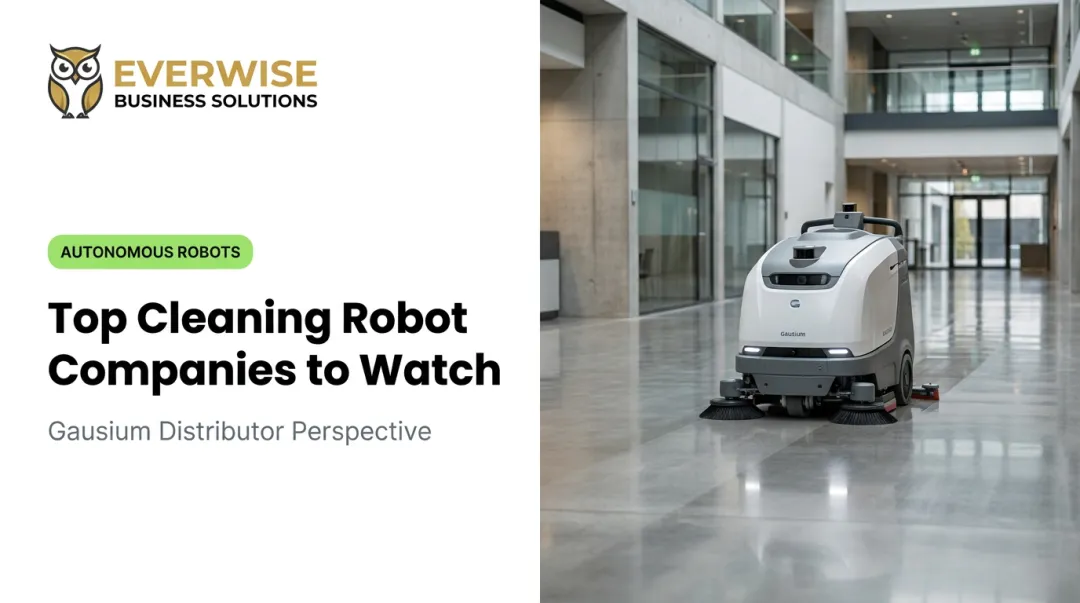
Gausium robots use 3D depth cameras combined with AI to automatically identify floor types — hardwood, stone, carpet — and adjust cleaning mode and brush height accordingly. Real-time rerouting updates the robot's internal map on the fly, so a misplaced chair or hallway cart doesn't stop a cleaning cycle.
Edge-Cleaning Precision
Corridors accumulate debris along walls and baseboards. A robot that leaves a 4-inch gap along every wall isn't maintaining a professional appearance. Look for zero-distance edge cleaning capability — where high-precision sensors allow the robot to clean right up to walls and baseboards using side brushes that sweep debris into the cleaning path.
Air Filtration Quality
Basic sweepers redistribute fine dust and allergens rather than capturing them. In high-occupancy campus environments — student unions, library commons, residence hall corridors — this matters.
H13 HEPA filtration, per EN 1822/ISO 29463 standards, captures ≥99.95% of particles at the most penetrating particle size (typically 0.1–0.25 micrometers). Gausium's Vacuum 40 includes H13 HEPA filtration as standard — a meaningful distinction in enclosed campus spaces where recirculated air affects student and staff health daily.
Fleet Management Software
A single-building pilot is manageable without much oversight. Scale to multiple buildings, and remote visibility becomes essential. Look for:
- Central dashboard for route scheduling and status monitoring
- Cleaning log reports for accountability and compliance
- Remote schedule adjustments without on-site visits
- Maintenance alerts before issues become downtime
Safety Systems
Campus robots operate near students, staff, and equipment. Required safety layers include obstacle detection, emergency stop functionality, and speed limiting in occupied areas. Most university deployments also schedule primary routes during off-peak or overnight windows, which reduces disruption and lowers collision risk significantly.
How to Plan Your Campus Sweeping Robot Deployment
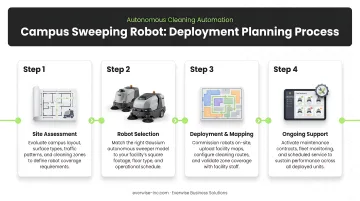
Step 1 — Document Your Highest-Value Routes First
Before selecting a robot, map your top 2–3 hard-floor zones. For each, record:
- Total square footage
- Current labor hours spent on floor sweeping per week
- Cleaning frequency required
- Physical constraints (narrow doorways, stairs, high-traffic windows)
This documentation becomes your business case. It also determines which robot class fits the deployment — not the other way around.
Step 2 — Match Robot Size to Route Requirements
Robot selection follows route analysis. Corridor clearance, door widths, and daily square footage all determine which model is appropriate. A robot that's too wide for a key corridor, or too small for the target floor area, creates more management burden than it solves.
If you're unsure which model fits your floor plan, Everwise Business Solutions offers on-site route consultations for Texas universities before any purchase commitment — call 210.884.0559 to get a site visit scheduled.
Step 3 — Schedule Around Campus Rhythms
University cleaning windows are predictable once mapped:
- Dining halls: between meal service periods
- Student unions and recreation centers: overnight or early morning
- Main corridors: during class periods or overnight
- Semester breaks: ideal time for extended route learning and calibration
Running robots during off-peak windows also reduces the need for staff rerouting and allows the robot to complete full routes without interruption — which directly improves completion rates.
Step 4 — Define Metrics Before You Expand
The pilots that win continued budget approval track specific numbers:
- Labor hours removed from repetitive floor sweeping
- Route completion rates (did the robot finish the assigned area?)
- Overtime avoided
- Floor appearance consistency scores
Wait until the first building shows at least 8–10 weeks of stable data before expanding. Finance and operations leadership are far more likely to fund Phase 2 when you arrive with completion rates and labor savings documented — not projections.
Cost, ROI, and Procurement
What Does a Campus Sweeping Robot Cost?
Public pricing for commercial autonomous sweepers varies widely by model, navigation capability, and service terms. Entry-level commercial robots start around $22,000 for smaller units; larger scrubber-sweeper platforms are typically quote-based. Total cost of ownership includes:
- Robot hardware
- Replacement brushes and filters
- Maintenance and service agreements
- Software and fleet management fees
Everwise Business Solutions offers Texas-specific pricing for Gausium robots — contact them for a quote tailored to your campus's square footage and deployment requirements.
The ROI Model
Facilities teams calculate robot ROI using this formula:
Annual labor hours saved × loaded labor rate = gross annual savings Gross annual savings − annual robot program cost = net annual ROI
The input that matters most is how many square feet of repeatable hard floor the robot covers daily. Larger coverage areas compress the payback timeline. The Quinnipiac University deployment, which covers 50,000 square feet weekly across campus buildings, illustrates the scale a single unit can achieve.
A few caveats worth keeping in mind:
- No universal campus payback benchmark exists — timelines vary by facility size, labor rates, and route complexity
- Treat any vendor-guaranteed ROI timeline with skepticism unless backed by a site-specific calculation
Procurement Paths
| Option | Best For | Key Consideration |
|---|---|---|
| Outright purchase | Campuses with capital budget and stable long-term routes | Lowest total cost over time |
| Leasing / financing | Lower upfront cost preference | Internal service capacity required |
| Robot-as-a-Service (RaaS) | Predictable monthly budget, limited IT/service staff | Vendor handles uptime and service |
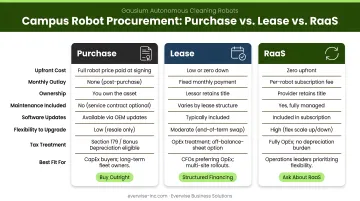
Everwise Business Solutions currently offers direct purchase for Gausium robots. Universities exploring financing structures can contact Everwise directly to discuss options suited to their procurement requirements.
Addressing Common University Concerns
"Will this replace our custodial staff?"
No — and framing it that way makes internal approval harder. Sweeping robots handle the most repetitive large-area floor tasks so human custodians can focus on restrooms, touchpoints, classrooms, and event resets. RIT described exactly this outcome: staff were redirected to deeper cleaning work, not eliminated. That's the message that wins over staff and unions.
"Are these robots safe around students?"
Commercial sweeping robots include multiple safety layers: obstacle detection, proximity sensors, automatic slowdown in high-traffic zones, and emergency stop functionality. RIT has operated campus cleaning robots since 2016 across active residence halls, athletics, and arts buildings without publicly reported safety incidents. Scheduling robots during off-hours keeps them out of peak student traffic entirely.
"What happens when the robot needs service or a route changes?"
Vendor selection matters as much as product selection here. Three factors determine whether a deployment stays productive long-term:
- Remote route updates pushed through the management software
- Responsive local technicians who can be on-site quickly
- Ongoing support capacity as your campus needs shift
For Texas universities, working with an authorized local distributor like Everwise Business Solutions — with service teams based in San Antonio and Pharr — means support issues get resolved faster than with a distant national vendor.
Frequently Asked Questions
How much does a commercial autonomous sweeping robot cost?
Commercial autonomous sweeping robots typically range from roughly $22,000 for entry-level units to significantly more for larger scrubber-sweeper platforms, which are generally quote-based. Total cost of ownership includes service agreements, consumables, and software — not just the hardware price. Financing and RaaS subscription models can spread that investment over time.
Do robot sweepers really work?
Autonomous sweeping robots are well-proven in high-traffic commercial and educational environments. RIT has operated campus cleaning robots since 2016; Quinnipiac University cleans 50,000 square feet weekly with a single robotic unit. Effectiveness depends on deploying them in the right zones: large, open, repeatable hard-floor areas.
What is a sweeping robot called?
In commercial settings, these machines are commonly called autonomous floor sweepers, robotic floor scrubbers, or autonomous mobile robots (AMRs). Some models combine sweeping and scrubbing functions. Commercial-grade campus robots are a different category entirely from consumer devices like Roomba.
Are sweeping robots safe to use around students and staff?
Commercial sweeping robots use obstacle detection, proximity sensors, and emergency stop systems to navigate safely in occupied environments. Most universities also schedule robots during off-peak or overnight windows as a precaution, significantly reducing contact with building occupants.
Can a sweeping robot handle outdoor campus areas?
Most commercial sweeping robots are designed for indoor hard-floor environments. Outdoor plazas, pathways, and parking areas require different equipment with appropriate IP ratings and weather tolerance. Confirm outdoor compatibility — including IP rating and surface type — with your vendor before assuming any indoor robot can handle exterior spaces.
How do I get started with a sweeping robot on my university campus?
Start by identifying your 2–3 highest-traffic hard-floor zones and documenting current labor hours spent on floor sweeping in those areas. Then request an on-site assessment from a local authorized distributor to confirm route fit before committing to purchase. For Texas universities, Everwise Business Solutions can be reached at 210.884.0559 or german.zavala@everwise-inc.com.