Introduction
Hotel operators are caught between three compressing forces: guests who expect spotless lobbies and corridors after every stay, a staffing market that has yet to recover from pandemic-era losses, and profit margins that leave little room to simply hire your way out of the problem.
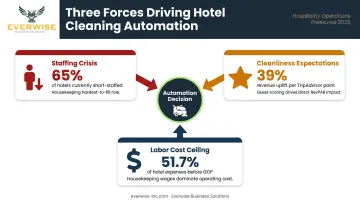
According to AHLA's 2025 workforce survey, 65% of hotels reported active staffing shortages, with housekeeping cited as the leading shortage by 38% of respondents.
Labor now accounts for 51.7% of hotel expenses before gross operating profit, per CBRE Hotels Research — which means cutting cleaning labor isn't just an operational decision, it's a line-item one.
Cleaning robots have moved from trade-show curiosity to a practical answer to these overlapping pressures. This article walks hotel operators and housekeeping directors through the robot categories available today, the real business case for adoption, and what to evaluate before investing — including which models fit different property types and what vendor support actually looks like.
Key Takeaways
- Cleaning robots take over repetitive floor care, freeing housekeepers for guest-facing tasks and room detailing
- Robot categories vary by function: floor scrubbers, vacuum robots, UV-C disinfection units, and humanoid models each suit different hotel zones
- Labor accounts for over half of hotel operating expenses; even modest automation can deliver measurable savings
- Match robot specs to your floor surfaces before buying; carpet-to-marble transitions trip up many models
- A pilot-first approach — one robot, one zone, 30 to 60 days — dramatically reduces adoption risk
Why Hotel Housekeeping Is Facing a Staffing and Cleanliness Crisis
The Staffing Gap Isn't Temporary
Hotels were still nearly 200,000 jobs short of pre-pandemic employment levels as of mid-2024, per AHLA workforce reporting. Former hospitality workers who left during COVID-19 moved into other industries and largely haven't returned — creating a structural gap, not a cyclical one.
Housekeeping is the hardest role to fill. It's physically demanding, often part-time, and faces direct wage competition from retail and food service. Properties that can't staff housekeeping fully are forced into uncomfortable trade-offs: skipping daily room cleans, reducing corridor cleaning frequency, or piling workloads onto remaining staff until turnover accelerates the problem further.
Cleanliness Now Directly Affects Revenue
Guest expectations around cleanliness were already rising before the pandemic. Post-COVID, they became non-negotiable. J.D. Power's 2025 North America Hotel Guest Satisfaction Index found that improved value perception was driven largely by guest room condition and cleanliness. Cornell research found that a one-point improvement on TripAdvisor's five-point scale correlates with a 39% increase in revenue.
That number has a sharp downside too: negative reviews mentioning dirty rooms rank among the most damaging to online reputation scores — and a single bad housekeeper shift on a busy weekend can generate multiple one-star reviews that stay indexed for years.
The Budget Math Doesn't Favor Simply Hiring More
With labor already consuming more than half of operating expenses, adding headcount isn't straightforward. For mid-scale and independent properties especially, the cost stack compounds quickly:
- Rising hourly wages driven by retail and food service competition
- Benefits and overtime costs on reduced headcount
- Recurring recruiting and onboarding expenses as turnover accelerates
That combination — chronic understaffing, non-negotiable cleanliness expectations, and a labor budget already at its ceiling — is what's pushing cleaning automation from a future consideration into an operational decision being made right now.
Types of Robots Currently Transforming Hotel Cleaning
Hotels aren't one-size-fits-all environments, and neither are the robots designed for them. Here's how the major categories break down:
Autonomous Floor Scrubbers and Vacuums for Public Areas
This is the most mature and widely deployed category. Autonomous floor scrubbers and vacuum robots handle lobbies, long corridors, banquet pre-function areas, and large hard-floor zones — following programmed routes, returning to docks to recharge, and cleaning tens of thousands of square feet per shift without a dedicated operator.
Gausium's autonomous cleaning robots, available through Everwise Business Solutions across Texas, represent the advanced end of this category. The Gausium Vacuum 40, for example, uses 3D depth cameras and AI-based Intelligent Floor Identification to automatically detect surface type — carpet, marble, vinyl, stone — and adjust brush height and cleaning mode accordingly. Its 24 kPa suction power handles deeply embedded carpet debris, while H13 medical-grade HEPA filtration captures fine particulates to protect indoor air quality in enclosed corridors.
Gausium's own case study from a Hanting Hotel deployment (part of Huazhu Group) showed corridor cleaning across five floors completed in 1.5 hours using the Vacuum 40 with elevator API integration — a direct illustration of what autonomous corridor cleaning looks like at hotel scale.
Compact Scrubbers for Narrow and Mixed-Use Hotel Spaces
Restaurant edges, café zones, and narrow back-of-house corridors are too confined for large machines. The Gausium Phantas addresses exactly this scenario — engineered as a compact autonomous cleaner for boutique hotels and small-to-midsize properties, with 0cm-from-edge cleaning capability that reaches flush against walls and corners. It handles vacuuming, sweeping, and dust mopping in a single pass, making it a practical fit for properties where larger robots would simply be oversized.
Robotic Floor Scrubbers for High-Traffic Hotel Areas
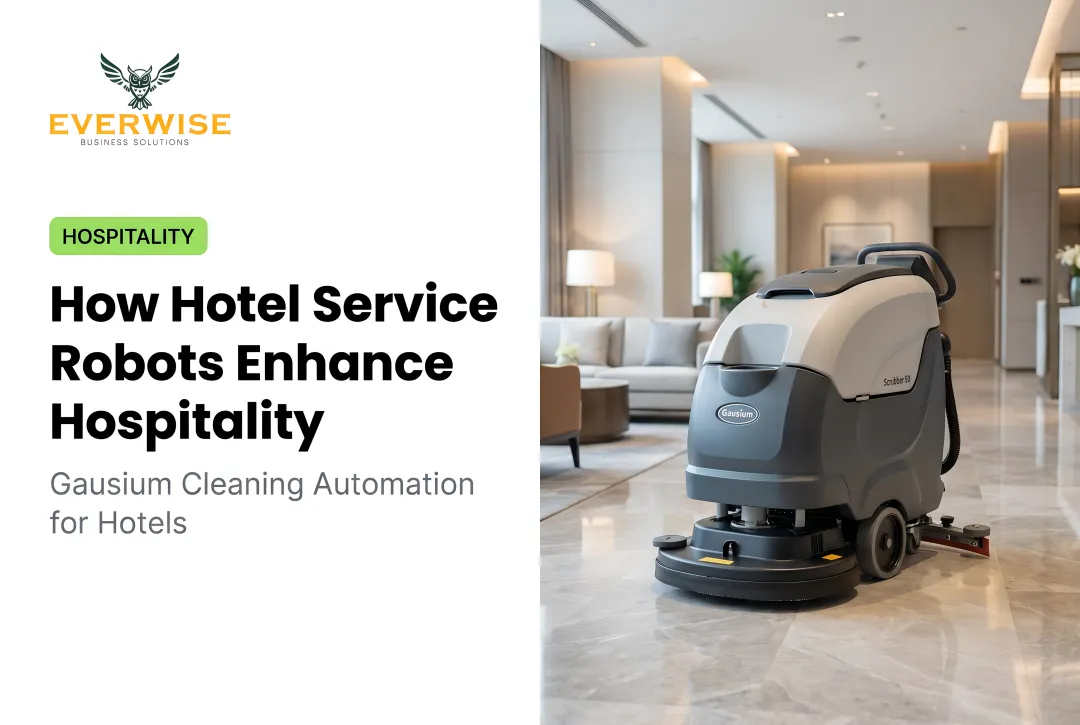
Hotel lobbies, restaurant floors, and back-of-house corridors take a beating — foot traffic, food spills, and industrial-grade grime that a vacuum pass won't resolve. The Gausium Scrubber 75 is built for exactly these conditions: a heavy-duty robotic floor scrubber-dryer with a 270° brush head that scrubs and dries in a single pass on tile, sealed concrete, vinyl, and even oily kitchen floors.
For hotel operators running multi-shift properties, the Scrubber 75 supports continuous operation without a dedicated operator monitoring each cycle — freeing housekeeping staff for rooms and guest-facing work rather than floor maintenance.
AI-Powered Robots for High-Traffic Common Areas
Hotel common areas present a specific challenge: constant, unpredictable foot traffic that disrupts static cleaning routes. The Gausium Omnie is designed for exactly these high-dynamic environments, using AI-driven navigation to adapt in real time rather than following fixed programmed paths.
Where the Vacuum 40 and Phantas excel in corridors and smaller defined zones, the Omnie's dynamic navigation and AI spot-cleaning mode make it the right fit for lobbies, conference foyers, and atrium spaces where guest movement patterns change throughout the day. H13 HEPA filtration is integrated, addressing particulate air quality as a byproduct of the cleaning cycle.
Where Autonomous Floor Cleaning Fits Today
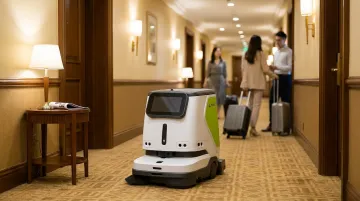
The practical deployment reality for most hotel operators in 2025 is autonomous floor cleaning — lobbies, corridors, restaurants, and back-of-house — not in-room humanoid systems. That's where the technology is mature, the ROI is documented, and the integration path is straightforward.
Fully humanoid, in-room cleaning robots remain early-stage across the industry. For hotel operators evaluating automation now, autonomous floor-cleaning platforms deliver measurable results without the integration risk of experimental hardware.
The Real Benefits of Hotel Cleaning Robots for Operations and Guests
Consistent, Fatigue-Free Cleaning Quality
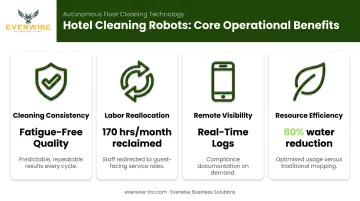
A robot runs the same programmed route to the same standard on its hundredth pass as its first. There's no variation from staff fatigue, rushed turnovers, or mid-shift understaffing. For hotel operators, that means predictable floor quality in high-visibility areas and fewer complaints about dirty lobbies or corridors — the exact issues that generate the most damaging online reviews.
Labor Reallocation and Cost Reduction
Robots don't eliminate housekeeping jobs. They redirect human effort toward higher-value work. When a Gausium Vacuum 40 handles corridor cleaning across five floors autonomously, hotel managers can redirect those housekeepers to guest-facing roles, room detailing, and quality inspections.
The labor math is meaningful. Gausium's reported case-study data suggests the Scrubber 50 can reclaim approximately 170 manual labor hours per month at a facility cleaning 5,000 square meters daily. With labor comprising over half of hotel operating expenses, recovering even a fraction of that time has direct impact on the P&L.
Remote Visibility and Compliance Logging
Modern Gausium robots connect to the Gausium Mobile App, which gives hotel operations managers remote visibility into cleaning task status, schedule management, and cleaning logs — accessible from anywhere, including off-property. These logs serve a compliance function as well, providing documentation for health inspections and brand audits.
The app delivers practical value across three areas:
- Task monitoring: View real-time cleaning status across floors and zones without walking the property
- Schedule management: Adjust cleaning runs remotely to respond to occupancy shifts or event setups
- Compliance documentation: Export cleaning logs for health inspections, brand audits, and internal QA reviews
For directors of housekeeping, this shifts cleaning oversight from a manual spot-check process to a data-backed one.
Sustainability and Resource Efficiency
Autonomous floor scrubbers apply water and cleaning solution at programmed, consistent rates — reducing the over-application that's common in manual scrubbing. Gausium's Scrubber 50 Pro product documentation states its water-recycling filtration system reduces freshwater usage by approximately 80% compared to standard operation.
For hotel groups pursuing Green Key certification or LEED credits under the USGBC's green cleaning policy, documented resource reduction from autonomous cleaning equipment directly supports those program requirements. For properties with formal ESG reporting obligations, the Gausium Mobile App's cleaning logs provide the documented, verifiable data those reports require.
Taken together, these four operational benefits — cleaning consistency, labor reallocation, management visibility, and resource efficiency — represent the core business case hotel procurement teams bring to the CFO before signing off on a cleaning automation deployment.
What to Look for When Choosing a Hotel Cleaning Robot
Match the Robot to Your Spaces First
Before contacting any vendor, audit your property:
- Map the zones that need the most frequent cleaning — lobbies, corridors, banquet pre-function areas, BOH kitchens
- Identify floor surfaces — carpet, marble, tile, vinyl, mixed, or oily industrial floors
- Note tight spaces — narrow corridors, restaurant edges, elevator foyers
- Estimate square footage per zone and required cleaning frequency
Then match robot specifications to those actual requirements. For example:
| Property Type | Recommended Model Mix |
|---|---|
| Boutique / Limited-Service | Gausium Phantas + Vacuum 40 |
| Mid-Scale / Convention Hotels | Gausium Mira + Vacuum 40 + Scrubber 75 |
| Luxury / Full-Service / Resorts / Casinos | Gausium Marvel + Omnie + Scrubber 75 + Vacuum 40 |
The Gausium Vacuum 40's AI floor identification handles mixed-surface transitions automatically — carpet corridors, marble lobbies, tile BOH areas — without manual reconfiguration. The Scrubber 75's 270° rotational brush head reaches edges and corners in service corridors that fixed-brush models miss.
For active lobbies with constant guest traffic, the Omnie is the better fit. Its Auto Spot Cleaning handles constantly shifting obstacles where fixed-route robots stall.
Evaluate Vendor Support and Total Cost of Ownership
Over a 3–5 year deployment, the vendor relationship and service structure drive more of your total cost than the hardware itself. Key factors to evaluate:
- Local technician availability — can a service tech reach your property quickly?
- Preventive maintenance contracts — scheduled quarterly or semi-annual visits covering brush condition, HEPA filter replacement, sensor calibration, and battery health
- OEM spare parts availability — genuine replacement components, not aftermarket substitutes that void warranty coverage
- Software update support — ongoing navigation and app updates that maintain performance
Everwise Business Solutions provides statewide Texas technician coverage from hubs in San Antonio and Pharr, with service extending to Austin, Dallas, Houston, and the Rio Grande Valley. For multi-property hotel groups, a single service contract can cover a full fleet across multiple locations.
Plan for Staff Onboarding
Staff resistance is the most common reason pilots stall. Start with a pilot-first deployment: one robot, one high-traffic zone, 30–60 days. Measure performance, gather feedback, then expand.
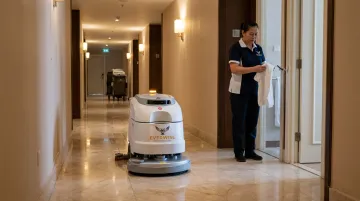
Frame the rollout clearly from day one. Staff who understand the robot is handling physically demanding corridor scrubbing — not replacing their roles — adopt it faster and with far less friction.
Overcoming the Common Challenges of Hotel Robot Adoption
The Upfront Cost Barrier
Capital cost is the most cited adoption barrier, particularly for independent and mid-scale properties. Several approaches make the economics more manageable:
- Leasing options convert a CapEx purchase into an OpEx line item
- Section 179 deduction eligibility (up to $2.5 million in qualifying property for 2025) can significantly reduce the effective first-year cost for qualifying U.S. businesses — operators should consult a tax advisor on their specific situation
- ROI modeling over 18–36 months — calculating labor hours saved against robot cost — typically makes the case clear for properties running two or more cleaning shifts
For properties starting their first procurement, Everwise offers complimentary ROI modeling that includes payback period projections and labor-replacement analysis. Factor in the cost of not automating as well: overtime, agency staff, inconsistent cleanliness scores, and the revenue drag of negative reviews all carry real financial weight.
Integration and Practical Operations
Running robots effectively in a hotel environment requires some operational planning:
- Schedule cleaning runs during low-traffic windows — early mornings, mid-afternoon lulls, or overnight
- Train staff on how to manually reroute a robot around an obstacle it can't navigate autonomously
- Integrate cleaning logs from the Gausium Mobile App into broader housekeeping management workflows for compliance and performance tracking
The Gausium Omnie's real-time dynamic navigation handles the most unpredictable environments — active lobbies, event spaces during setup — without getting stuck. For planned overnight or off-hours runs, the Vacuum 40's auto-charging capability means it returns to dock when battery is low, recharges, and resumes cleaning without staff intervention.
Frequently Asked Questions
Can robots clean hotel rooms?
Current commercial robots are most reliably deployed in public areas like lobbies and corridors. Some models perform in-room floor vacuuming, but full room turnover remains a human task. Humanoid robots capable of in-room cleaning (including bathroom scrubbing and restocking) exist in early-stage pilots but aren't widely available at production scale.
How much does a hotel cleaning robot cost?
Autonomous floor scrubbers and vacuum robots range from several thousand to tens of thousands of dollars depending on capability and coverage area. Pricing for Gausium models through Everwise Business Solutions is available on request, tailored to property size and fleet configuration — with leasing options and Section 179 tax deductions available to reduce effective upfront cost.
What tasks can hotel cleaning robots perform?
Current robots handle floor vacuuming and scrubbing in public areas and — in some platforms — elevator navigation for logistics support. Some manufacturers also offer UV-C disinfection units for room surfaces. Emerging humanoid models add in-room tasks like restocking amenities and handling laundry, though commercial deployments are still limited.
Do hotel cleaning robots replace housekeeping staff?
No. Robots take over repetitive, physically demanding tasks — corridor scrubbing, floor vacuuming, linen logistics — so staff can focus on guest interactions, room detailing, and quality inspections. A Gausium survey found more than 90% of hotel staff reported feeling more effective and more satisfied working alongside autonomous robots.
Are hotel cleaning robots worth the investment?
For most hotel operators, yes — particularly when chronic understaffing, inconsistent cleanliness, and negative reviews factor into the comparison. ISSA survey data found 28% of autonomous cleaning users expected ROI within 6–12 months and 49% within 13–24 months, making a 2–3 year labor-savings horizon the standard evaluation framework.
Texas hotel operators looking to evaluate Gausium autonomous cleaning robots can contact Everwise Business Solutions at 210.884.0559 or german.zavala@everwise-inc.com (Monday–Friday, 9:00 AM–6:00 PM). Onsite proof-of-concept deployments are available across San Antonio, Austin, Dallas, Houston, and the Rio Grande Valley.